Double Ball Roulette Variant Advances Through 2026 Patent for Multi-Ball Mechanics
Geschrieben von Eden Perry · 4.9.2026

Double Ball Roulette Variant Advances Through 2026 Patent for Multi-Ball Mechanics
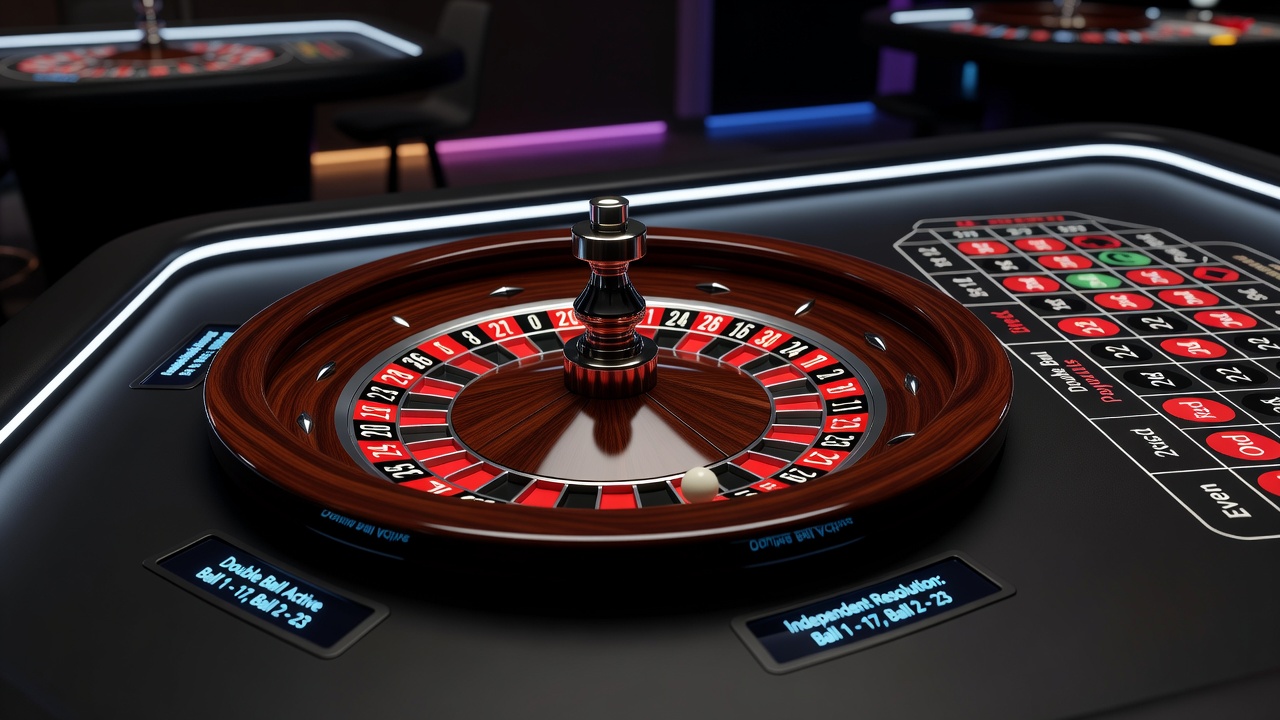
Double Ball Roulette introduces two independently resolved balls on one wheel, which generates additional outcomes per spin, raises volatility levels, and shifts standard betting probabilities such as the chance to hit a chosen number reaching approximately 5.33 percent on a 37-pocket wheel. Observers note that this setup delivers more action at the table while altering payout structures and risk profiles compared to traditional single-ball formats.
Core Mechanics of the Variant
The system operates by launching two balls that settle into separate pockets without direct interaction during resolution, and players receive combined results that can include two distinct winning numbers on each spin. Data from industry reports indicates teh probability adjustment stems directly from the dual resolution process, since each ball maintains independent odds yet shares the same wheel layout, which expands potential combinations without requiring multiple wheels or separate betting areas. Those who have examined the variant point out that house edges remain consistent per outcome even as overall session variance increases due to the doubled resolution events.
Mechanical Challenges in Implementation
Engineers face specific hurdles when deploying dual-ball systems, particularly ball interference where one sphere might alter the path or landing of the second during deceleration phases. Research into wheel dynamics shows that standard single-ball designs do not account for these interactions, which can compromise fairness if left unaddressed, and manufacturers have explored various physical modifications to maintain independent resolutions. According to technical analyses, friction patterns, pocket depth variations, and launch timing all contribute to maintaining equitable conditions across repeated spins.
The 2026 Patent and Its Innovations
In September 2026 Interblock D.O.O. received assignment of a patent covering a refined multi-ball roulette system that incorporates staggered launches alongside sub-pocket divisions to prevent interference and ensure fair play. Inventors listed on the filing include Urban Bergant and John Joseph Connelly, whose approach segments the wheel infrastructure to guide each ball into distinct settling zones while preserving the shared betting surface for players. This configuration allows simultaneous resolutions without one ball displacing the other, addressing the core mechanical concerns that previously limited such variants in live casino environments.
Patent documentation details how staggered timing sequences separate the launch moments by fractions of a second, which reduces collision risks during the initial spin phase, while sub-pockets create isolated landing areas that merge results only after both balls have come to rest. Those reviewing the filing note that these features support consistent randomization across both balls, thereby upholding regulatory standards for randomness in gaming equipment. The assignment occurred amid broader industry interest in expanding table game options through controlled multi-outcome mechanics.
Betting Dynamics and Player Experience Adjustments
Betting options expand under the dual-ball format because wagers can cover single resolutions, combined outcomes, or specific pairings, which changes how players structure their positions compared to classic roulette. Studies on similar multi-resolution games reveal that the elevated hit rate on individual numbers influences strategy considerations, since the effective coverage per spin rises while payout multiples adjust accordingly to balance the mathematics. Observers have documented that this leads to faster table turnover and altered bankroll management patterns during extended sessions.
Regulatory bodies in various regions, including those overseeing equipment certification in the European Union and North American markets, evaluate such systems for compliance with randomness and fairness criteria before approval. The patented features provide documented pathways for meeting these requirements through physical design rather than software overrides alone. Industry associations tracking gaming innovation have referenced this development in reports on table game evolution, highlighting its potential applications in both land-based and hybrid casino settings.
Broader Context Within Gaming Equipment Development
Interball D.O.O. has positioned the technology as an extension of existing roulette platforms, allowing integration with current wheel manufacturing processes while adding the dual-ball capability. Patent records show emphasis on durability and maintenance simplicity, which addresses practical concerns for operators deploying the variant at scale. Data collected from prototype testing phases, as referenced in associated filings, demonstrates consistent performance metrics across thousands of spin cycles under controlled conditions.
Academic examinations of roulette physics, including those published through university engineering departments, have long explored multi-object dynamics on rotating surfaces, and this patent builds upon such foundational work by applying targeted solutions to interference issues. The result offers a pathway for operators to introduce higher-volatility options without redesigning entire table infrastructures from the ground up.
Conclusion
The 2026 patent assigned to Interblock D.O.O. marks a concrete step forward for Double Ball Roulette by resolving key mechanical barriers through staggered launches and sub-pocket engineering, which enables reliable dual resolutions on a single wheel. This development directly supports the variant's core attributes of increased action and modified probabilities while maintaining standards for fair play. As certification processes continue across jurisdictions, the system stands positioned for potential deployment in regulated markets seeking expanded roulette offerings.